
QUICK ANSWER
For Many Florida Homes, Tile and Quality LVP Are the Most Practical Starting Points.
There is no universal best flooring for every Florida home. Tile is highly durable and handles moisture well. Luxury vinyl plank is popular because many products are water resistant, easy to maintain and comfortable in everyday living areas. Engineered wood can also work when the product and installation method are appropriate for the home's moisture conditions.
- Moisture exposure should be part of the flooring decision in Florida.
- Tile is durable and well suited to wet or high-moisture areas.
- Quality LVP is a practical option for many living areas and remodels.
- Engineered wood is generally more dimensionally stable than solid hardwood in humid conditions.
- The concrete slab or subfloor has to be evaluated before the finished material is installed.
LUXURY VINYL PLANK
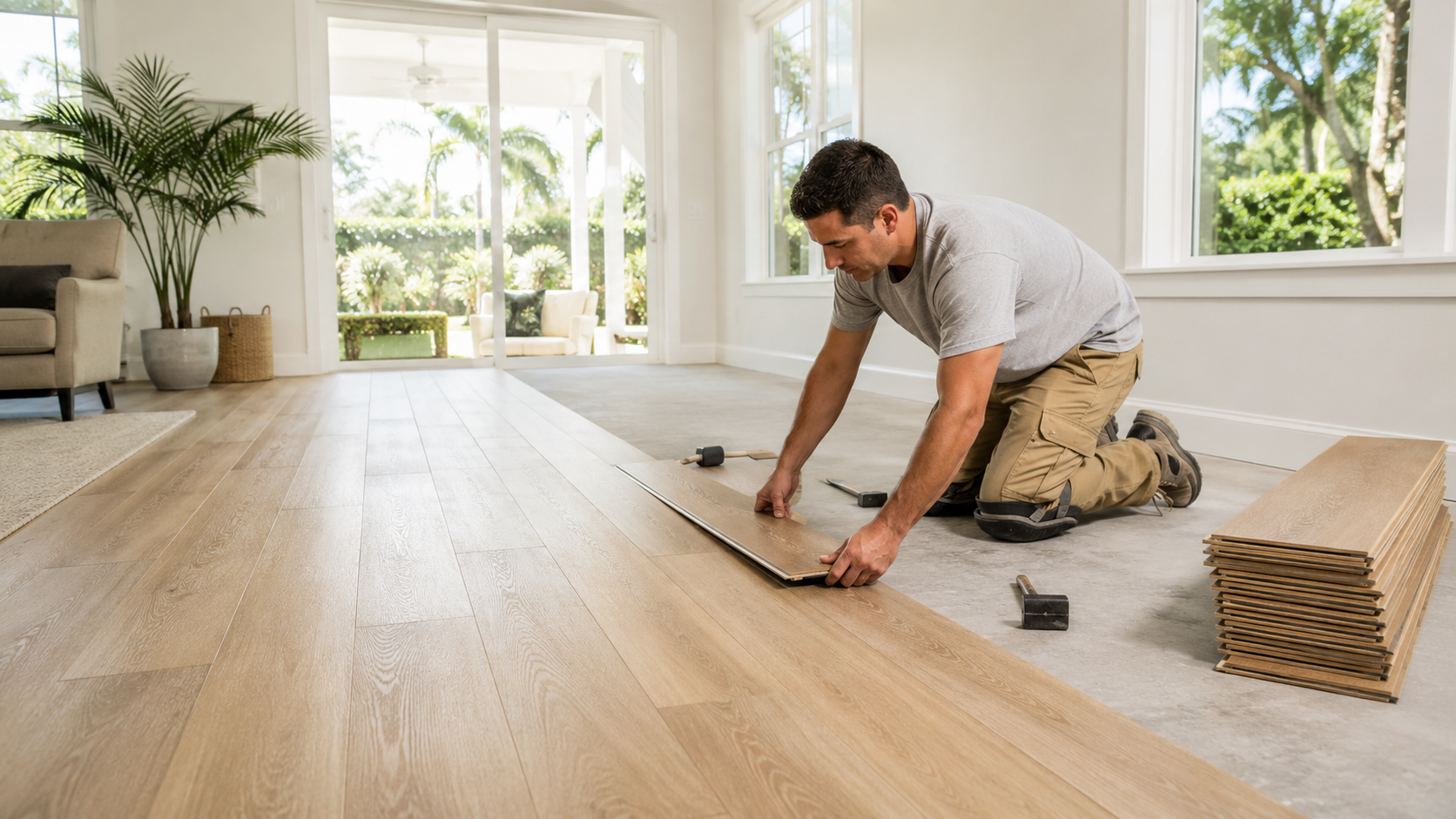
LVP Works Well When You Want Practical Maintenance and a Consistent Look.
Luxury vinyl plank is common in Florida homes because it can handle everyday spills and humidity better than many traditional wood products. It also makes it easier to carry one visual style through living rooms, hallways, bedrooms and other connected spaces.
That does not mean every LVP product performs the same way. Wear layer, core construction, locking system, attached pad and manufacturer installation requirements can all affect how the finished floor performs.
If you are comparing budget and installation scope, see how much LVP flooring installation can cost in Florida.
TILE FLOORING
Tile Is Hard to Beat for Moisture Resistance and Durability.
Porcelain and ceramic tile are common Florida choices for bathrooms, kitchens, entry areas and other spaces where water and frequent cleaning matter. Tile does not swell like wood-based materials when exposed to humidity, and it can perform well over properly prepared concrete slabs.
The tradeoff is feel. Tile is harder underfoot and can feel cooler than plank products. Grout maintenance and substrate preparation also matter if you want the installation to stay clean and consistent over time.
ENGINEERED WOOD
Engineered Wood Can Deliver a Real-Wood Look With Better Stability Than Solid Hardwood.
Engineered wood uses layered construction rather than one solid piece of wood. That construction can make it more stable through humidity changes than traditional solid hardwood, which is one reason homeowners may consider it when they want a more natural wood appearance.
It still is not a waterproof material. Product specifications, acclimation, slab moisture and installation method all need to be considered before it is used over a Florida concrete slab.
WHAT IS UNDERNEATH
The Concrete Slab Can Matter as Much as the Flooring You Pick.
Many Florida homes are built on slab-on-grade foundations. Moisture moving through or sitting within the concrete can affect adhesives, underlayments and finished flooring systems. Flatness also matters because low spots, high spots and surface damage can create movement or visible irregularities in the finished floor.
The Florida Building Code includes moisture-protection requirements in situations where wood components interact with concrete or masonry exposed to ground moisture. For a homeowner, the practical takeaway is simpler: do not treat the slab as automatically ready just because it looks dry from the surface.
Swift's flooring installation service includes review of the existing floor and preparation needs before the installation scope is finalized.
ROOM-BY-ROOM CHOICES
The Best Material Can Change From One Part of the Home to Another.
LVP or engineered wood can provide a warmer residential look across connected rooms.
LVP and tile are common choices because spills and frequent cleaning are part of normal use.
Tile remains a strong choice for wet areas, while some waterproof-rated LVP products can work outside direct shower areas when installed correctly.
Transitions, room heights, trim and visual continuity matter when one flooring system runs through multiple spaces.
If flooring is part of a larger project, Swift can coordinate it with residential remodeling and whole-home remodeling work under one scope.
COMMON QUESTIONS
Florida Flooring FAQs
What flooring is best for Florida humidity?+
There is no single best material for every room, but tile and many luxury vinyl plank products are common choices because they handle moisture exposure better than materials that are more sensitive to humidity. The subfloor and installation system still matter.
Is LVP a good flooring choice for Florida homes?+
LVP is widely used in Florida because many products are water resistant, relatively easy to maintain and comfortable for everyday living. Product quality, subfloor condition and installation details affect performance.
Is tile better than LVP in Florida?+
Tile generally offers excellent moisture resistance and durability, while LVP can provide a warmer feel underfoot and a faster installation in some rooms. The better choice depends on the room, budget, maintenance preferences and the condition of the floor underneath.
Can engineered wood work in a Florida home?+
Engineered wood can be a better fit than solid hardwood in humid environments because its layered construction is more dimensionally stable. Moisture conditions and manufacturer installation requirements still need to be respected.
Why does the concrete slab matter when choosing flooring?+
Many Florida homes are built on concrete slabs. Moisture movement, flatness and surface condition can affect which flooring system and preparation method are appropriate, so the slab should be evaluated before installation.
PLANNING RESOURCES