
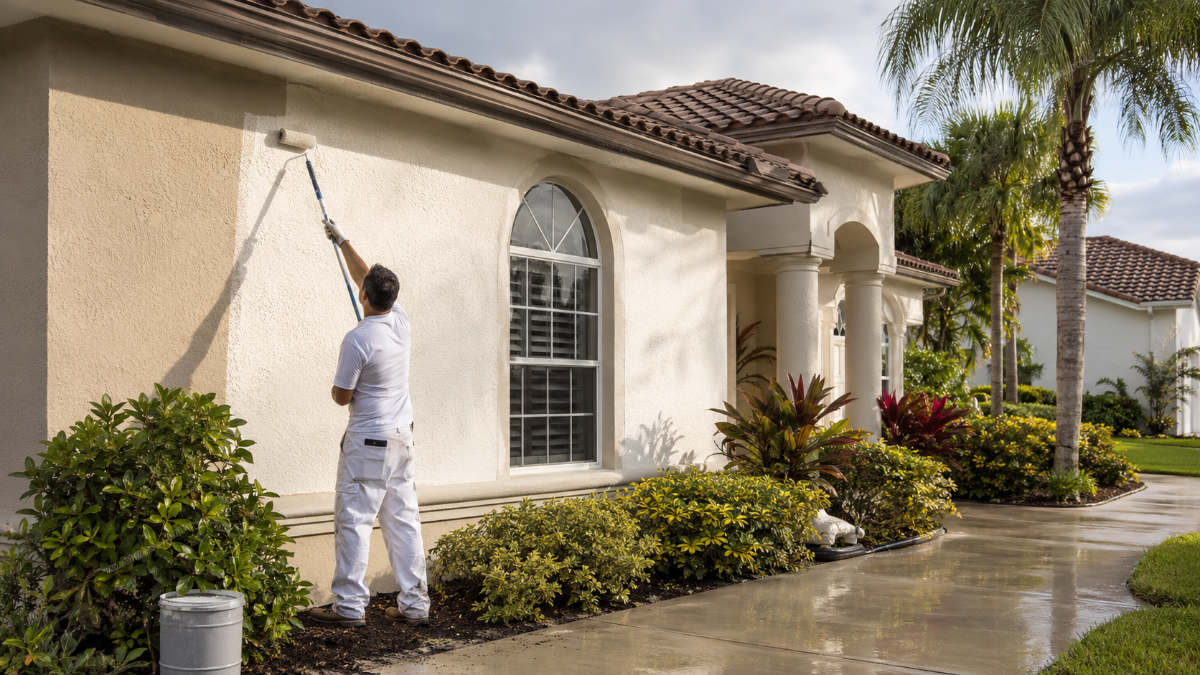
QUICK ANSWER
What Does Hurricane Season Have to Do With Exterior Painting?
Painting does not strengthen a home against hurricane-force wind or replace shutters, impact protection, roof maintenance or other storm-preparation measures. The connection is maintenance. Before the wettest and stormiest part of the year, an exterior inspection can identify peeling paint, failed caulk, stucco cracks, exposed substrate and damaged trim that should be corrected before repeated rain and moisture make those conditions worse.
For Spring Hill homeowners, the goal is not to “paint for hurricanes.” It is to keep the exterior envelope maintained, schedule coating work during appropriate weather and avoid discovering preventable surface problems after weeks of summer rain.
- Exterior paint is routine weather protection, not hurricane hardening.
- Inspect caulk, stucco, trim and existing coatings before the summer rainy season when possible.
- Surface preparation matters more than rushing to apply a new finish coat.
- Do not paint into an approaching tropical system or extended stretch of wet weather.
- After severe weather, inspect for new cracking, impact damage, failed sealant and moisture-related problems before repainting.
WHY TIMING MATTERS
Spring Hill Has Two Seasonal Realities to Plan Around.
The Atlantic hurricane season officially runs from June 1 through November 30. That does not mean a storm will affect Spring Hill every year, and it does not mean exterior work stops for six months. It does mean homeowners should avoid waiting until a storm is approaching to notice that the exterior already has maintenance problems.
West Central Florida also has a defined rainy season. The National Weather Service Tampa Bay office places the start of the rainy season in late May for much of West Central Florida, with frequent summer rainfall continuing into early October. That repeated moisture, combined with heat and strong sun, creates a demanding environment for exterior coatings.
A good maintenance plan works around those patterns. If the paint is already peeling, caulk has opened around trim or stucco cracks are expanding, it makes more sense to address the condition during a suitable weather window than to wait for a calendar date labeled “painting season.”
The best time to inspect is before the problem becomes urgent. Spring is often useful because it gives you time to identify repairs before the wettest stretch of the year. Fall can also be a good time to reassess the exterior after months of rain and storm exposure.
START WITH CONDITION
Look for Problems Before You Pick a Color.
The most important exterior-painting decision may happen before anyone opens a can of paint. Walk the home and look at what the existing coating is telling you.
- Peeling or flaking paint: loose material has to be addressed before a new coating can bond properly.
- Bubbling or blistering: this can indicate moisture, adhesion or substrate problems that should be evaluated before repainting.
- Stucco cracks: small hairline cracking and larger movement-related cracks should not automatically be treated the same way.
- Failed caulk: open joints around trim, penetrations and transitions can allow water into places where it does not belong.
- Chalking: a powdery surface can affect adhesion and usually needs proper cleaning before coating.
- Faded or thin coverage: strong Florida UV exposure can break down exterior finishes over time.
- Damaged trim: soft, split or deteriorated trim should be repaired rather than simply painted over.
- Exposed substrate: bare wood, masonry or other exposed surfaces need the right preparation and primer strategy.
This is where a professional walkthrough becomes more useful than choosing paint from a color card. A contractor should be looking at what needs to be cleaned, scraped, repaired, sealed or primed before discussing the finish coat.
PREPARATION BEFORE PAINT
The Protective Value Comes From the Whole Coating System.
Homeowners often think of exterior painting as the final visible layer. In reality, much of the work that determines how the job performs happens before that layer goes on.
Preparation can include cleaning the surface, removing loose material, scraping failing paint, sanding or feathering edges, sealing appropriate cracks, replacing failed caulk, repairing minor trim damage and spot priming exposed or repaired areas. The exact process depends on the exterior material and its condition.
If new paint is applied over dirt, chalk, loose material or a failing underlying coating, the finished surface can look good initially while still having a weak foundation. That is why two painting estimates can differ substantially even when they appear to cover the same square footage.
For homeowners comparing proposals, ask what preparation is actually included. “Pressure wash and paint” is not the same scope as a proposal that identifies cracks, caulk, loose coatings, primer needs and trim repairs.
For more on long-term maintenance, read how often you should repaint a home in Florida humidity. If you are budgeting the project, see the average cost to paint a house exterior in Florida.
WEATHER WINDOWS
Do Not Rush Exterior Paint Because a Storm Is Forecast.
When a tropical system is approaching, painting should not become part of the last-minute checklist. Coatings need appropriate surface and weather conditions to dry and cure as intended. Wind-driven rain, elevated surface moisture and an unstable forecast are reasons to postpone, not reasons to hurry.
The priority before a storm is life safety and property protection. Follow local emergency guidance, secure outdoor items, prepare opening protection where applicable and complete other storm-readiness steps. A paint project can wait.
Even without a named storm nearby, Florida's summer pattern requires attention to timing. Afternoon thunderstorms can shorten the available workday. A surface that looks dry in the morning can still hold moisture from overnight rain. Direct sun can heat some elevations much more than others.
A contractor should schedule around the actual conditions of the home and the coating manufacturer's requirements rather than using one generic rule for every day of the year.
FLORIDA STUCCO
Stucco Needs More Than a Quick Wash and a New Color.
Many Spring Hill homes have stucco exteriors, which makes crack evaluation and surface preparation especially important. Stucco can develop hairline cracking over time, and some cracks may be cosmetic while others deserve a closer look before coating.
The goal is not to hide every visible line under thicker paint. The goal is to understand the condition well enough to choose the right preparation. Loose or deteriorated material, open cracks and failed previous repairs should be addressed before finish coats go on.
Moisture staining is another reason to slow down. If an area repeatedly shows discoloration after rain, simply painting over it may hide the symptom without addressing why the surface keeps getting wet.
On a maintained stucco exterior, a fresh coating system can help the surface shed normal rainfall and resist Florida weathering. But paint is not a structural repair, and it should never be sold as one.
CAULK, TRIM & PENETRATIONS
Small Gaps Become More Important When Rain Is Driven Sideways.
Florida homeowners tend to focus on the broad wall surfaces, but some of the most important maintenance points are the transitions: around windows, doors, trim, utility penetrations and other joints.
Caulk can shrink, split or separate over time. Painted trim can develop cracks or deterioration. Previous patches can fail. During normal rainfall, those issues may seem minor. During repeated summer storms and wind-driven rain, weak transitions can become much more noticeable.
A thorough exterior-painting walkthrough should include these details. Not every gap is solved with caulk, and not every damaged area belongs in a painter's repair scope, but the condition should at least be identified before the finish work begins.
That is part of what separates maintenance-oriented painting from simply changing the color of the house.
AFTER SEVERE WEATHER
Inspect Again Before You Assume the Exterior Is Fine.
After a significant storm, look at the home with fresh eyes. New damage may not be dramatic. Check for cracks that appear larger, sealant that has separated, trim that was struck by debris, water staining, damaged soffit or fascia, and areas where paint has lifted or failed.
If water intrusion is suspected, do not treat the issue as a painting problem first. Find the source. A coating should not be used to cover an active leak, damaged building component or unresolved moisture condition.
Once the underlying condition is addressed, painting can become part of restoring and protecting the repaired surface.
This is also a good time to distinguish storm damage from normal maintenance. Insurance, roofing, window or structural issues may need different professionals. A painter should not imply that a finish coating solves problems outside the painting scope.
A BETTER PRE-SEASON PLAN
Use a Simple Exterior Maintenance Sequence.
Instead of waiting until hurricane season is underway, use a straightforward process that gives you time to make decisions without urgency.
Look for peeling paint, cracks, open joints, staining and damaged trim.
Separate cosmetic coating work from repairs that need another trade or deeper investigation.
Remove dirt, algae, chalk and other surface contamination using a method appropriate for the material.
Scrape, repair, seal and prime where the actual condition requires it.
Choose a stable weather window rather than forcing work around rain or a tropical system.
Look for new damage before assuming routine maintenance is still all the home needs.
Swift provides exterior painting, residential painting and pressure washing services for Florida properties. If exterior maintenance is part of a larger renovation, Swift can also coordinate it with residential remodeling work.
THE BOTTOM LINE
Prepare the Exterior Before Hurricane Season, but Do Not Confuse Paint With Storm Protection.
A well-maintained paint system matters in Florida because the exterior is exposed to intense sun, frequent summer rainfall, humidity and wind-driven weather. That makes inspection and preparation worthwhile before conditions become more demanding.
But the purpose of exterior painting is still maintenance and surface protection. It does not reinforce windows, replace roof work, stop structural movement or make a house hurricane-proof.
The best approach is simple: inspect early, repair what actually needs repair, prepare the surface correctly, paint during appropriate conditions and check the exterior again after severe weather.
That gives homeowners a more useful goal than “paint before hurricane season.” The goal is to enter the season with an exterior that is maintained, known and not hiding obvious problems under a fresh coat.
COMMON QUESTIONS
Spring Hill Exterior Painting FAQs
Should I paint my house right before a hurricane?+
No. Do not rush exterior painting because a storm is approaching. Coatings need suitable surface, moisture and drying conditions. Hurricane preparation should focus first on life safety and property protection, with painting scheduled during an appropriate weather window.
How can exterior painting help before hurricane season?+
Exterior paint does not make a home hurricane-proof, but a properly prepared coating system helps protect exterior surfaces from normal Florida sun, rain and moisture. The preparation process can also expose failed caulk, stucco cracks, peeling coatings and damaged trim before those problems worsen.
When should Spring Hill homeowners inspect exterior paint?+
A practical time is before the summer rainy season begins, with another visual check after severe weather. In West Central Florida, the National Weather Service identifies the rainy season as beginning in late May and continuing into early October.
What exterior problems should be repaired before repainting?+
Peeling or bubbling paint, open cracks, failed caulk, damaged trim, exposed substrate, chalking and moisture-related staining should be evaluated before new finish coats are applied.
Can pressure washing be part of paint preparation?+
Yes. Cleaning is often part of exterior preparation, but the method should be appropriate for the surface. Stucco and painted finishes may need controlled pressure and suitable cleaning solutions rather than maximum force.
PLANNING RESOURCES