
QUICK ANSWER
What Makes a Window Energy Efficient in Spring Hill?
For a hot Florida climate, homeowners should pay close attention to the NFRC label, especially the window's U-factor and Solar Heat Gain Coefficient. A lower U-factor means less heat moves through the window, while a lower SHGC means less solar heat enters through the glass. ENERGY STAR guidance also emphasizes selecting windows for the correct climate zone rather than choosing a product based on one feature alone.
- Compare NFRC-rated U-factor and SHGC values, not just words like "efficient" or "insulated."
- Lower SHGC is especially important in hot, sunny climates because it limits unwanted solar heat gain.
- Low-E coatings can improve performance without requiring heavily tinted glass.
- Impact resistance and energy efficiency are separate specifications.
- Good installation is necessary for the window to perform as intended.
READ THE LABEL
Two Window Ratings Matter Most for Florida Homeowners.
U-Factor
U-factor measures how readily heat moves through the window assembly. Lower numbers indicate better resistance to heat flow. ENERGY STAR and the U.S. Department of Energy both use U-factor as a primary measure when comparing window performance.
Solar Heat Gain Coefficient
Solar Heat Gain Coefficient, or SHGC, measures how much solar heat passes through a window. The scale runs from 0 to 1, and lower numbers mean less solar heat is admitted. DOE guidance specifically recommends lower SHGC products in hot climates where air-conditioning demand is a major concern.
These numbers are more useful than simply comparing pane count. A double-pane product with the right coating and ratings may be better suited to a Florida home than another product marketed around glass thickness alone.
ENERGY STAR NOTE
Efficiency Standards Change by Climate Zone.
ENERGY STAR's current residential window criteria are climate-specific. That is why homeowners should confirm the product is certified for the climate where it will actually be installed rather than assuming every ENERGY STAR window has the same specifications nationwide.
Review ENERGY STAR Window Guidance →SPRING HILL CONDITIONS
Why Solar Heat Gain Deserves Extra Attention in Florida.
Spring Hill homeowners spend much of the year trying to keep heat outside rather than capture it. Windows exposed to strong sun can add to the cooling load inside a home, especially on elevations with long periods of direct afternoon sun.
DOE identifies low-E coatings, particularly spectrally selective coatings, as an effective hot-climate strategy because they can reduce summer heat gain without significantly reducing visible light. That makes the glass package important even when two windows look nearly identical from the street.
Low-E Glass
Low-emissivity coatings are extremely thin layers designed to control radiant heat transfer. Different low-E packages are tuned for different climates, so homeowners should compare the actual SHGC and U-factor instead of assuming every low-E window performs the same way.
Air Leakage
Efficiency is not only about glass. Operable windows also need to close and seal well. DOE recommends low air-leakage products for air-conditioned buildings because uncontrolled outdoor air makes the HVAC system work harder.
DON'T CONFUSE THE RATINGS
Impact Windows and Energy-Efficient Windows Are Not the Same Thing.
Florida homeowners often shop for storm protection and efficiency at the same time. That makes sense, but the two ratings answer different questions. Impact testing addresses resistance to windborne debris and pressure conditions. NFRC energy ratings describe heat transfer, solar gain and related performance.
An impact-rated product can also be energy efficient, but homeowners should verify both sets of specifications. Swift can discuss impact-rated window and door options as part of the replacement scope and help coordinate the opening, product and finish work under one project plan.
INSTALLATION MATTERS
A Good Window Can Still Perform Poorly in a Bad Opening.
DOE notes that even highly efficient windows can lead to drafts and moisture problems when they are not installed correctly. The product has to work with the opening around it.
- Existing openings should be measured and evaluated before products are finalized.
- Damaged framing, stucco or surrounding materials should be identified before installation.
- Flashing and water-management details need to match the wall assembly and opening.
- Perimeter gaps should be sealed so conditioned air is not lost around the frame.
- Interior trim, drywall, stucco and paint should be included when the replacement affects those finishes.
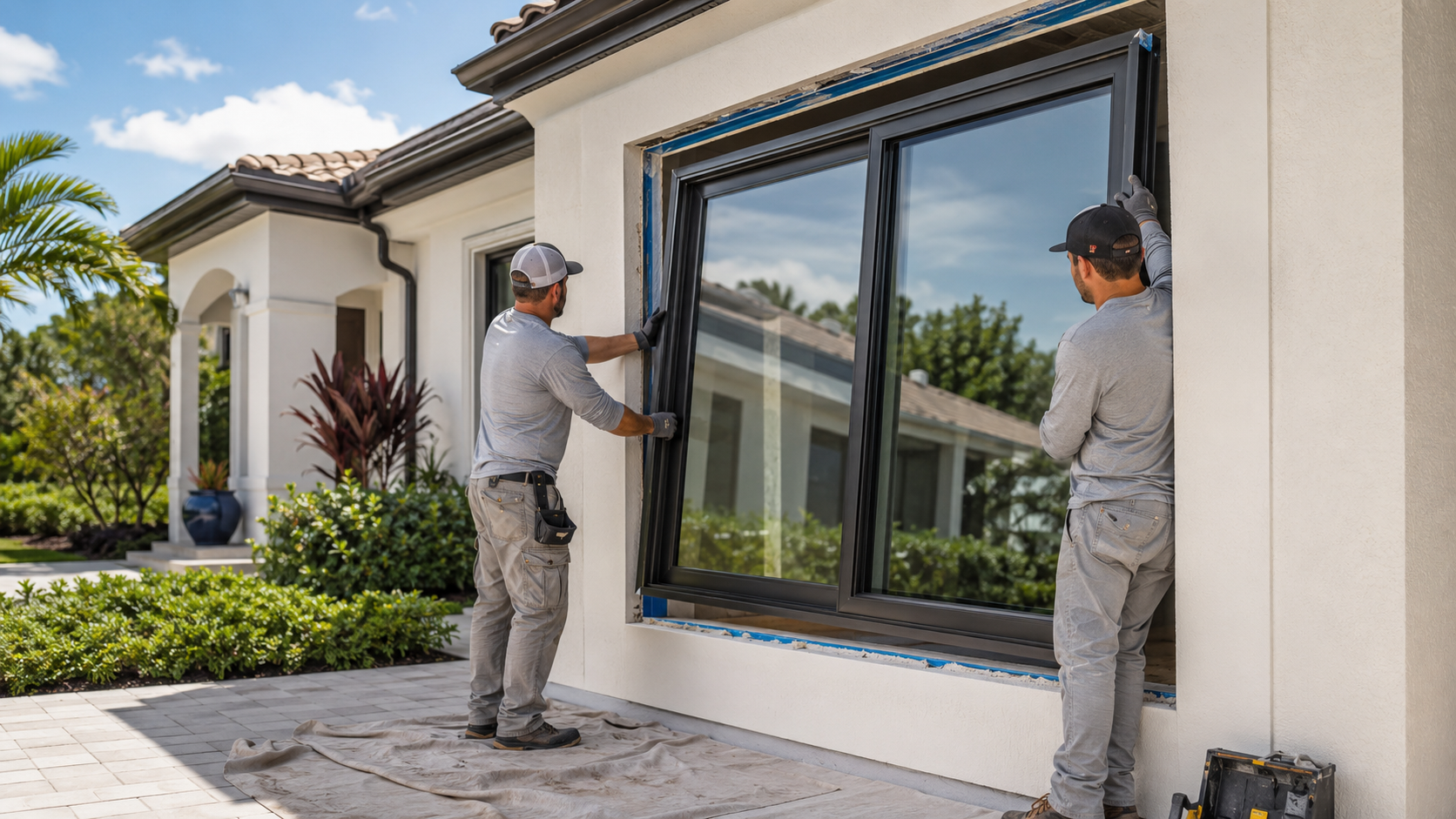
This is why Swift's window and door installation service treats replacement as more than a product swap. The opening, weather protection and finish work all have to be coordinated.
BEFORE YOU REQUEST QUOTES
What Should You Compare Between Window Proposals?
Compare U-factor and SHGC for the actual product being quoted.
Confirm the window is appropriate for the local ENERGY STAR climate zone if certification matters to you.
If storm protection is part of the goal, verify the impact specification separately from energy ratings.
Check whether removal, flashing, sealing, trim, stucco, drywall and paint are included.
A lower product price does not necessarily mean a lower total project cost if the proposal leaves out repair or finish work around the opening. Compare the complete scope before comparing the bottom line.
COMMON QUESTIONS
Energy-Efficient Window FAQs
What should Spring Hill homeowners look for in energy-efficient replacement windows?+
Start with the NFRC label and compare U-factor and Solar Heat Gain Coefficient ratings for products suited to Florida's warm climate. Lower SHGC values help limit unwanted solar heat gain, while a lower U-factor means less heat moves through the window assembly.
Does low-E glass help in Florida?+
Yes. Low-emissivity coatings can reduce unwanted heat transfer and solar heat gain. In hot climates, spectrally selective low-E coatings are commonly used to reduce heat entering the home while still allowing useful visible light.
Are impact windows automatically energy efficient?+
Not necessarily. Impact resistance and energy performance are separate characteristics. Homeowners should verify both the product's impact rating and its NFRC energy ratings instead of assuming one guarantees the other.
Will replacement windows lower my power bill?+
They can reduce heating and cooling loads, especially when existing windows are inefficient, poorly sealed or allow significant solar heat gain. Actual savings depend on the home, orientation, existing windows, HVAC use and installation quality.
How important is installation compared with the window itself?+
Very important. Even a high-performance window can underperform if the opening is not measured, flashed, sealed and finished correctly. Product selection and installation quality should be evaluated together.
OFFICIAL RESOURCES